· by Michael Blair, Nashville's Pressure Washing
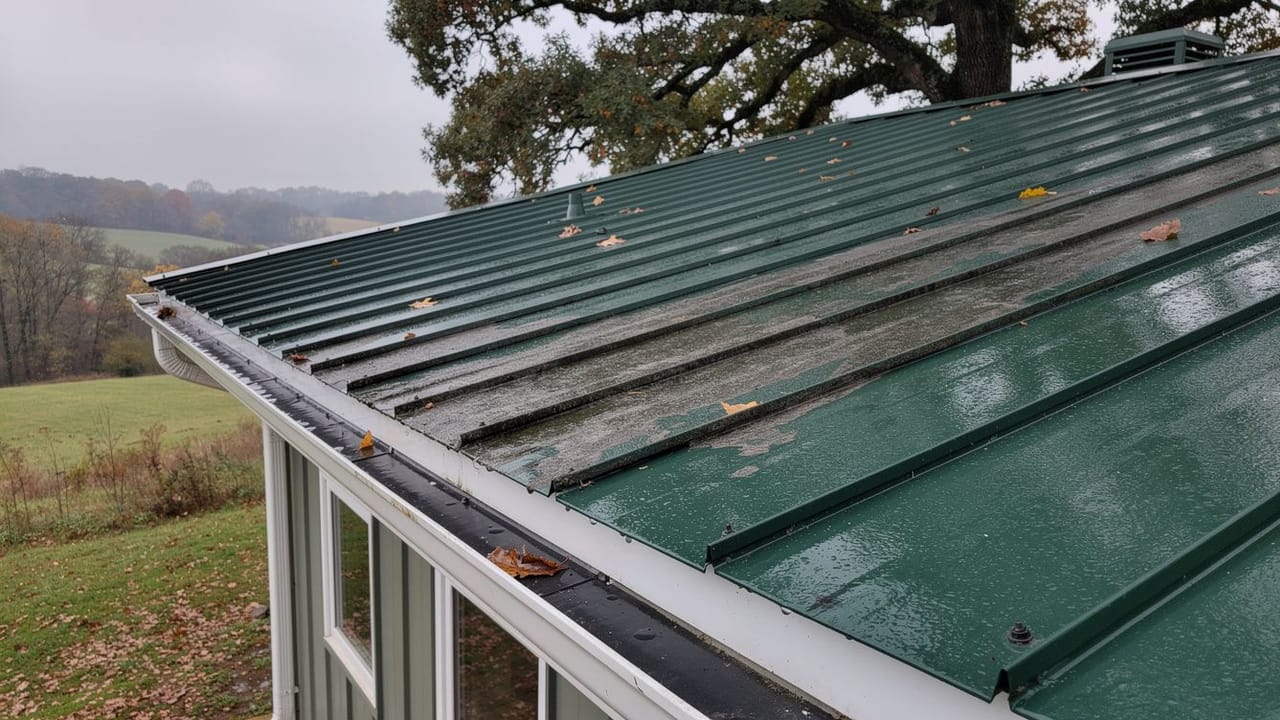
A metal roof gets dull the same way any roof does around Nashville: a gray film of road dust and pollen, dark streaks where mildew grows under trees, rust-colored marks where something sat on the panels. Most owners have heard that a pressure washer ruins a roof, and on asphalt shingles that is true, as our post on why we never pressure wash a shingle roof explains. Metal is different. The panel and coating makers publish cleaning guides, and those guides allow pressure spray. What they protect is the painted finish, which carries its own warranty and can be lost to the wrong brush or the wrong bottle. This is what those guides say and how it shapes our roof cleaning on metal.
Can you pressure wash a metal roof?
Yes, at low pressure, because the companies that make the paint and the panels say water from a hose or a pressure sprayer is the normal way to clean them. The Sherwin-Williams cleaning guide for its fluoropolymer coil coatings, a factory finish used on painted metal roofing, says a plain-water wash, from a hose or from pressure spray equipment, is usually enough. Panel maker MBCI’s guide to cleaning and care of its finish paint systems goes gentler still for routine care: fresh water from a garden hose under pressure, two or three times a year.
The one pressure figure in MBCI’s guide is easy to misread. It says pressure should not exceed 2,000 psi, but that limit sits in the instructions for preparing a panel to be repainted in the field, after it has been scuff-sanded. It is a ceiling for stripping a surface to take new paint, not a setting for a routine wash, and MBCI warns in the same place that repainting voids its panel finish warranty. On a roof that is only dirty, we treat the hose-and-gentle-spray language as the guide and keep the pressure well below that line.
What cleans a metal roof when water alone does not?
A mild detergent and a soft brush come next, then a mildew mix only where mildew is actually growing. Both guides name a 5 percent solution of an ordinary commercial detergent, not an industrial one, put on with a cloth or soft brush and followed by a thorough rinse. Sherwin-Williams says that solution will not harm its paint.
For mildew, the Sherwin-Williams guide notes that dirt and spores in humid places can let mildew grow, which describes the shaded side of a lot of Middle Tennessee roofs, and it gives a recipe: one third of a cup of powdered laundry detergent and one quart of 5 percent sodium hypochlorite, which is household bleach, in three quarts of water. Its companion guide for silicone modified polyester coatings, another factory finish, gives the same mix. MBCI’s routine wash, by contrast, calls for a detergent with no bleach in it. The difference is a reason to find out who made the panels and the paint before anything goes on, and both Sherwin-Williams guides say to test any cleaning agent in an inconspicuous area first.
What damages the finish on a metal roof?
Scratching and the wrong chemical do, far more than water. Both makers rule out wire brushes and abrasives because they wear into the coating, and both tie the warranty to how cleaners are used: MBCI says misuse of cleaning agents may void it, and Sherwin-Williams says misuse or abuse of the agents it lists will void the warranty for the surface affected. Solvents such as mineral spirits or rubbing alcohol appear in both guides only for deposits water will not touch, like tar or grease, and both treat them as flammable and toxic. They are a spot treatment, not a roof wash.
The less obvious threat is left behind by the people who built the roof. MBCI says the most important cleaning is the one right after the panels go up, because drilling and driving screws scatters metal shavings across them. Even shavings too small to see can lead to corrosion, and left in place they stain the panel with marks that cannot be removed. A roof that has had a repair, a new vent or a satellite dish mounted since it was installed can carry the same debris.
How we wash a metal roof
We start with a look at the panels and the paperwork if the owner has it, because the finish decides the chemistry. Then the roof gets a rinse with a wide fan tip at low pressure, working from the ridge down so dirty water runs off rather than over clean metal. Detergent goes on with a soft brush only where the rinse leaves a film, and the mildew mix goes only on growth, after the hidden-spot test. Every product comes off with plenty of clean water, and the beds below are wetted and rinsed so the runoff does not sit on the plants.
Any shavings we find get swept off before the wash. For rust marks, MBCI suggests lightly rubbing with a soft scrub that contains no bleach and rinsing thoroughly, and Sherwin-Williams allows diluted acid solutions only with a five-minute contact limit and a full flush, so we keep acids to the smallest stain that needs one.
The rinse water runs off a roof and toward the street, and our post on where wash water is allowed to go covers why we use no more cleaner than a job needs. We wash metal roofs on homes and outbuildings around Franklin and Williamson County and across Middle Tennessee. To get one cleaned, send us photos of the roof and the address, and tell us the panel maker if you know it.
Sources
- Sherwin-Williams Coil Coatings, Cleaning and Maintenance Guide: Fluoropolymer Coil and Extrusion Coatings (2018), hosted by McElroy Metal — Plain water with hoses or pressure spray equipment usually adequate; 5 percent detergent solution with cloth or soft brush; no wire brushes or abrasives; test in an inconspicuous area; mildew solution with bleach; diluted acid for rust limited to five minutes; misuse voids warranty
- Sherwin-Williams Coil Coatings, Cleaning and Maintenance Guide: Silicone Modified Polyester Coatings, hosted by McElroy Metal — Same precautions and the same mildew solution for silicone modified polyester finishes
- MBCI, Cleaning and Care of Finish Paint Systems (January 4, 2024) — Garden hose rinse two or three times a year; 5 percent non-bleach detergent; metal shavings lead to corrosion; bleach-free soft scrub for rust; 2,000 psi limit given for field-painting preparation; repainting voids the finish warranty
FAQ
Washing a Metal Roof Without Hurting the Finish — questions
How often should a metal roof be washed?
MBCI, a metal panel maker, suggests rinsing with fresh water from a garden hose two or three times a year. A roof in full sun may stay clean with less, while one shaded by trees and holding damp debris needs washing more often, and sometimes the coating maker’s mildew solution where dark growth has started.
Can you use bleach on a metal roof?
Sherwin-Williams gives a mildew mix for its coil coatings that includes household bleach: one third of a cup of powdered laundry detergent and a quart of bleach in three quarts of water. MBCI’s routine wash calls for a detergent without bleach, so check the panel and coating maker first and test any mix in a hidden spot.
What should you not use on a metal roof?
Keep wire brushes, scouring pads and other abrasives off the paint, because both the panel and coating makers say they damage the finish. Save solvents for small spots of tar or grease that water will not move. Misusing cleaning agents can void the finish warranty on the panels they touched, so follow the maker’s guide.
What is the best way to clean a metal roof?
Rinse first with plain water at low pressure, working from the top down. Where a film remains, use a 5 percent solution of an ordinary detergent applied with a soft brush and rinse it off thoroughly. Treat mildew only where it grows, with the coating maker’s own mix, after testing in an inconspicuous area.
How do you get rust stains off a metal roof?
MBCI suggests lightly rubbing the stain with a soft scrub cleaner that contains no bleach, then rinsing well. Sherwin-Williams allows diluted acid solutions on its finishes, but only for up to five minutes before a full flush with water. Sweep off any metal shavings left from installation, since MBCI says they can stain and corrode panels.