
· by Michael Blair, Nashville's Pressure Washing
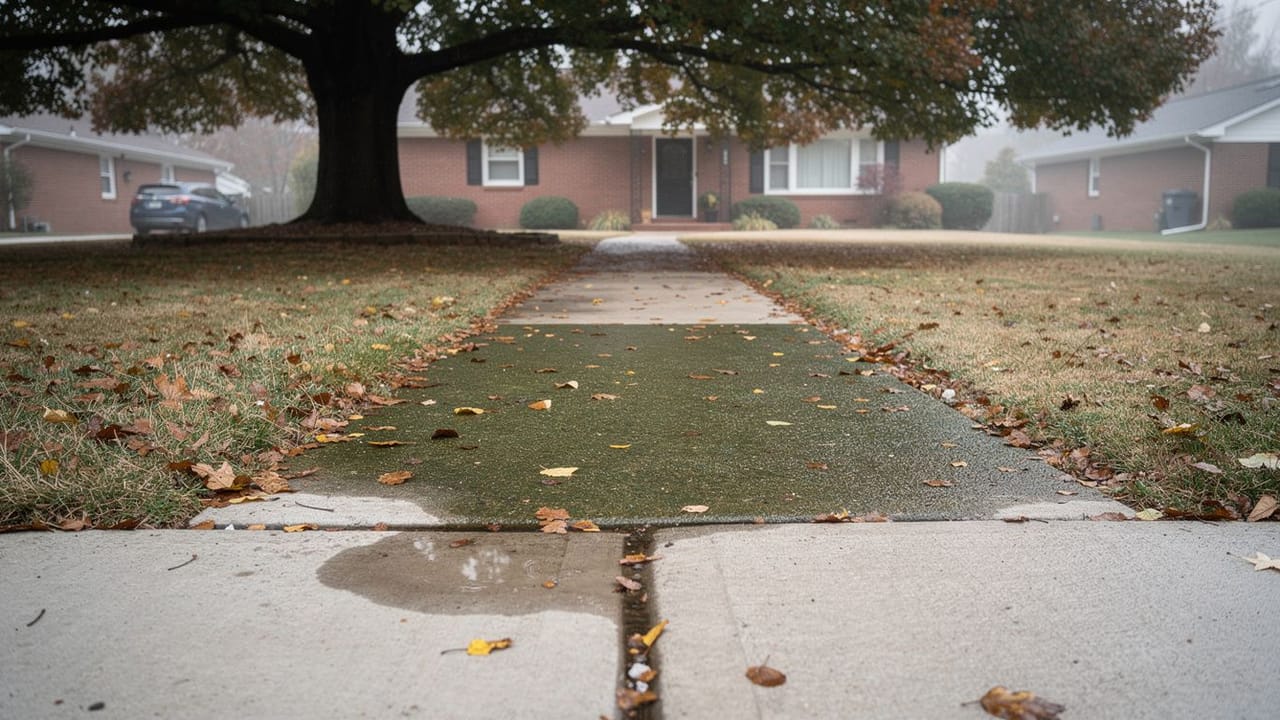
The front walk that runs under a big tree, the side path along the north wall, the stretch of public sidewalk beside a shop that never sees afternoon sun: these are the places that go green first, and once they are green they are slick after every rain. Owners usually try a bottle of cleaner from the hardware store, watch the walk come clean, and then watch the color creep back within weeks. That pattern is the clue to what is going on. This post explains why a shaded walk grows algae, what a cleaning does and does not change, and how often our crews expect to be back on the same concrete for driveway and concrete cleaning.
Why does a sidewalk keep turning green after it has been cleaned?
It turns green again because the conditions that grew the algae are still there after the cleaner is gone. A homeowner who wrote to the University of Maryland Extension through the Ask Extension service described exactly this: concrete walkways and a deck that came clean with several different products and went green again in about a week. The Maryland Home and Garden Information Center’s answer was that those spots are probably shady, damp or holding standing water, and that the conditions should be fixed where they can be.
The same answer names the second half of the problem. Algae need nutrients as well as moisture, and they get them from the dust and fine particles that are always blowing around outside and settling on whatever is there. A walk that stays wet and keeps collecting that film will grow a new crop no matter how well the old one was removed. The guidance is from Maryland rather than Tennessee, but the mechanism is the same here, and around Nashville the extra supply comes from oak and maple litter, spring pollen and the soil that washes off a bed onto the edge of the walk.
Can a sidewalk be pressure washed without damaging it?
Yes, a sound concrete sidewalk can be pressure washed, and done with the right tool it comes out evenly clean rather than striped. On our driveway and sidewalk cleaning jobs, crews use a rotary surface cleaner on the flat runs of a walk instead of a bare wand, because the wand held too close or swept unevenly leaves lines and can scar the surface paste. The edges and steps get a wider fan tip held back from the concrete. What can go wrong with the wrong nozzle and distance, on concrete and on everything else around a house, is laid out in what pressure washing can permanently damage.
Where the walk is badly stained, a cleaner goes on first and is given time to work so the washing does not have to do it all by force. The rinse water from a front walk runs toward the street, and Metro Water Services notes on its stormwater page that what enters the storm system gets no treatment before it reaches local waterways. That is one more reason to use only as much cleaner as the stain needs, and our post on where commercial wash water goes covers how runoff is handled on larger jobs.
How often does a shaded sidewalk need washing?
For a walk that stays shaded and damp, plan on once or twice a year. That is the figure the Maryland extension answer gives for power washing, and it makes the point plainly: a one-time treatment will not be permanent where moisture and nutrients favor algae. A walk in full sun that drains well can go much longer between cleanings, while the same concrete under a tree canopy on the north side of a house can go green again in a single wet season.
What changes that schedule is anything that lets the walk dry sooner and stay cleaner. When we clean a walk we point out what we see keeping it wet: a downspout emptying across it, a sunken section where water pools at a joint, branches that block the sun, or a planting bed sitting higher than the concrete and washing onto it. Raising the canopy, redirecting a downspout or sweeping off leaves and debris between washes all help. A sunken or broken section on a public sidewalk is a different matter, since the Nashville Department of Transportation says on its sidewalks page that it handles Nashville’s sidewalks, from planning new ones to repairing damage to old ones.
Some owners ask whether sealing the walk will keep the algae off. A sealer does not change the shade or the moisture that the extension answer points to, so we treat it as a separate decision; washing, drying and sealing a concrete slab explains when it makes sense and why it goes on a later day.
Storefront walks and the people who use them
A green walk in front of a shop, office or restaurant is slick for customers and staff alike, and wet algae is slick underfoot. For employers there is a federal reference point, though it does not address the public. OSHA’s walking-working surfaces rule, 29 CFR 1910.22, applies to workplaces and the employees in them: it asks that walking surfaces be kept clean and free of hazards, inspected regularly and as necessary, and that a hazardous condition be corrected before an employee uses the surface again. It does not mention algae and it does not cover customers, but it is a fair standard for how often a business walk should be looked at.
On a commercial property we usually set the entry walks, ramps and the strip of concrete beside the building on a recurring schedule with the rest of the exterior, which is how our commercial and fleet washing is normally arranged. Homeowners and business owners in Davidson County can see the area we cover on our pressure washing in Nashville page. To get a walk cleaned, send us a few photos and the address, and mention which stretch stays wet longest.
Sources
- Ask Extension, answer from the University of Maryland Extension Home and Garden Information Center — Algae on concrete walkways returns where it is shady, damp or holding water; it needs nutrients from settled dust; power washing once or twice a year may be required; a one-time treatment is not permanent
- Metro Nashville Water Services, Stormwater — Stormwater receives no treatment before it is released into local waterways
- Nashville Department of Transportation, Sidewalk Projects — NDOT is responsible for Nashville’s sidewalks, from planning new ones to repairing damage
- OSHA, 29 CFR 1910.22, Walking-working surfaces: general requirements (eCFR) — Workplace walking surfaces kept clean and free of hazards, inspected and hazards corrected before employees use them again; applies to employers and employees only
FAQ
Why a Shaded Sidewalk Turns Green and Slick — questions
Why does my sidewalk keep turning green after cleaning?
The algae comes back because the walk is still shaded, damp or holding water, and dust, pollen and leaf litter keep settling on it as food. Cleaning removes the growth but not those conditions, so the color returns. Drying the walk out sooner, by fixing drainage or letting in more sun, is what slows it down.
How often should a sidewalk be pressure washed?
A shaded, damp walk usually needs washing once or twice a year, which matches the extension guidance from the University of Maryland. A sunny walk that drains well can go much longer between cleanings. The schedule depends on how long that stretch of concrete stays wet after rain and how much debris lands on it.
Can you pressure wash a sidewalk?
Yes. Sound concrete takes pressure washing well when the flat runs are done with a rotary surface cleaner rather than a bare wand, which leaves stripes and can scar the surface. Edges and steps are done with a wide fan tip held back from the concrete, and stubborn stains get a cleaner first so less force is needed.
Does bleach kill algae on concrete?
Bleach and similar household cleaners will clear the green from concrete, but on a shaded, damp walk the growth often returns within weeks or less. The cleaner treats the algae that is there now, not the moisture and settled dust that let it grow. Use only what the stain needs, since the rinse water runs to the storm drain.
Is the algae on my sidewalk a slip hazard?
Yes. Wet algae on concrete is slippery, and a green walk is most dangerous right after rain or in the morning when it is still damp. For businesses, OSHA’s walking-surfaces rule asks employers to keep surfaces free of hazards for employees, which makes a regular look at entry walks a sensible habit for any shop or office.