· by Michael Blair, Nashville's Pressure Washing
A pressure washer will remove almost anything, including material you wanted to keep. The damage is usually not visible immediately, which is why the same mistakes keep being made.
Surfaces that cannot take pressure
Asphalt shingles lose their granules, which are the UV protection. A pressure-washed roof looks clean and ages years faster, and it commonly voids the shingle warranty.
Wood decking erodes between the grain, leaving a furry surface. Soft brick loses its fired face. Vinyl siding takes water behind it through the laps.
What soft washing is
Low pressure with a cleaning solution that does the work chemically rather than mechanically, given time to dwell before rinsing.
It removes algae, mildew and organic growth more thoroughly than pressure does, because it kills the organism rather than blasting the visible part off.
- Roofs: soft wash only, never pressure
- Wood decks: low pressure, wide fan, with the grain
- Vinyl siding: low pressure, never angled upward into laps
- Soft or historic brick: soft wash
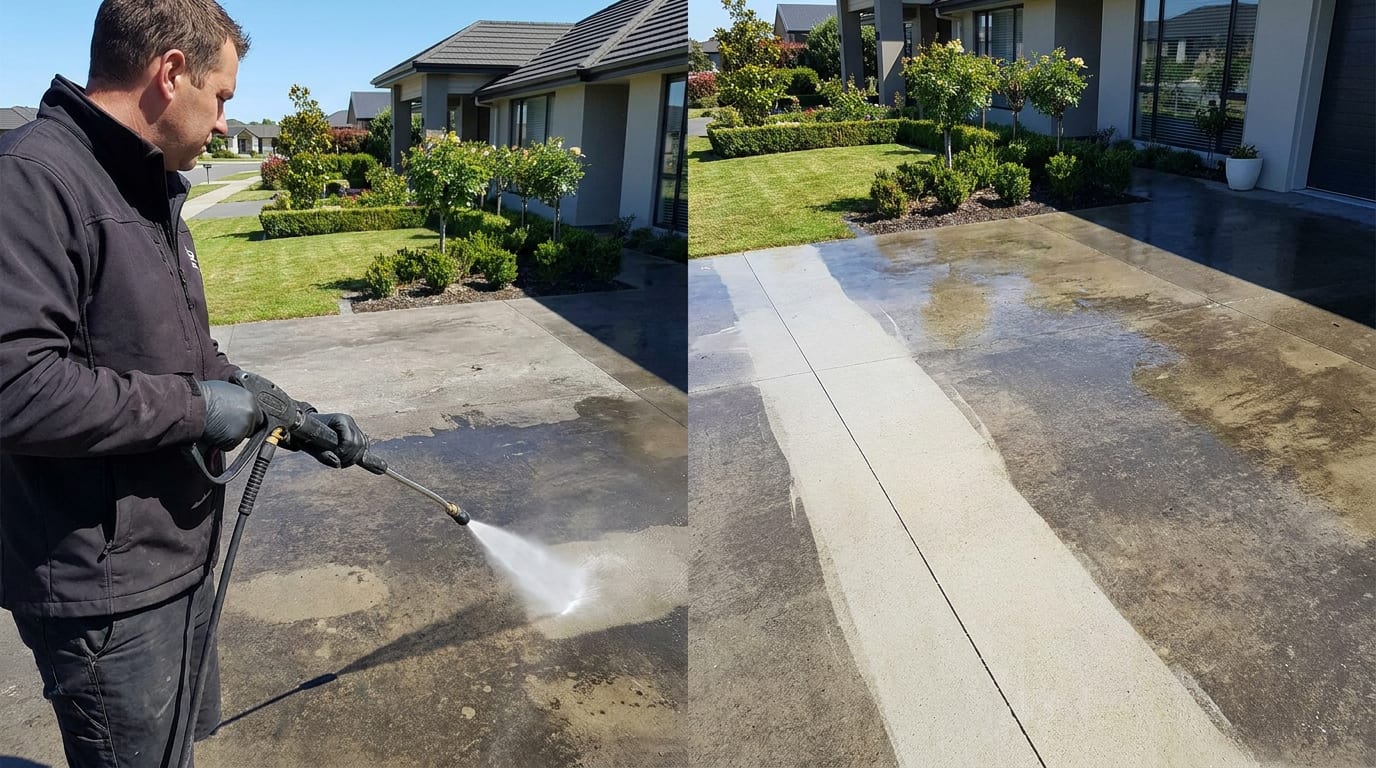
- Concrete and hard masonry: tolerates real pressure
Water behind the surface
Spraying upward under vinyl siding laps, or into soffit vents, drives water into the wall and the attic. It is a common cause of a mysterious interior stain a few weeks after a wash.
Always work downward on cladding, and keep the wand angled with the laps rather than into them.
Questions for a contractor
Ask what pressure and what solution they use on each surface, and specifically whether they soft wash roofs. Anyone proposing to pressure wash asphalt shingles should not be on the roof.
Ask about plant protection too — the solutions used are effective and unkind to planting if not pre-wetted and rinsed.