· by Michael Blair, Nashville's Pressure Washing
Soft washing uses a low-pressure application of a cleaning solution to kill and remove organic growth, rather than blasting it off with force. On several common exterior surfaces it is not a gentler alternative to pressure washing, it is the only method that does not cause damage.
The difference in one sentence
Pressure washing removes material mechanically, using water velocity to strip whatever is on the surface. Soft washing applies a solution that kills the organism, waits for it to work, and then rinses at a pressure not much above a garden hose.
That distinction matters because most of what discolors a house in Middle Tennessee is alive. Algae, mildew, moss and lichen are organisms rather than dirt, and killing them removes the staining at the root instead of scouring the top layer off and leaving the growth to return in weeks.
Where high pressure causes real damage
Roofs, unequivocally. Pressure on asphalt shingles strips the granules that are the shingle wear surface and can drive water under the courses. A pressure-washed roof loses years of life for a cosmetic result, and it typically voids the shingle manufacturer warranty.
Then siding, where pressure drives water behind the panels and into the wall; wood, which furrs up and turns fuzzy; older mortar, which is softer than the pressure applied to it; and window seals, screens and light fixtures, which simply are not built for it.
- Roof shingles: soft wash only
- Vinyl and fiber cement siding: low pressure with solution
- Wood siding, decks and fences: low pressure, careful tips
- Stucco, dryvit and older mortar: soft wash
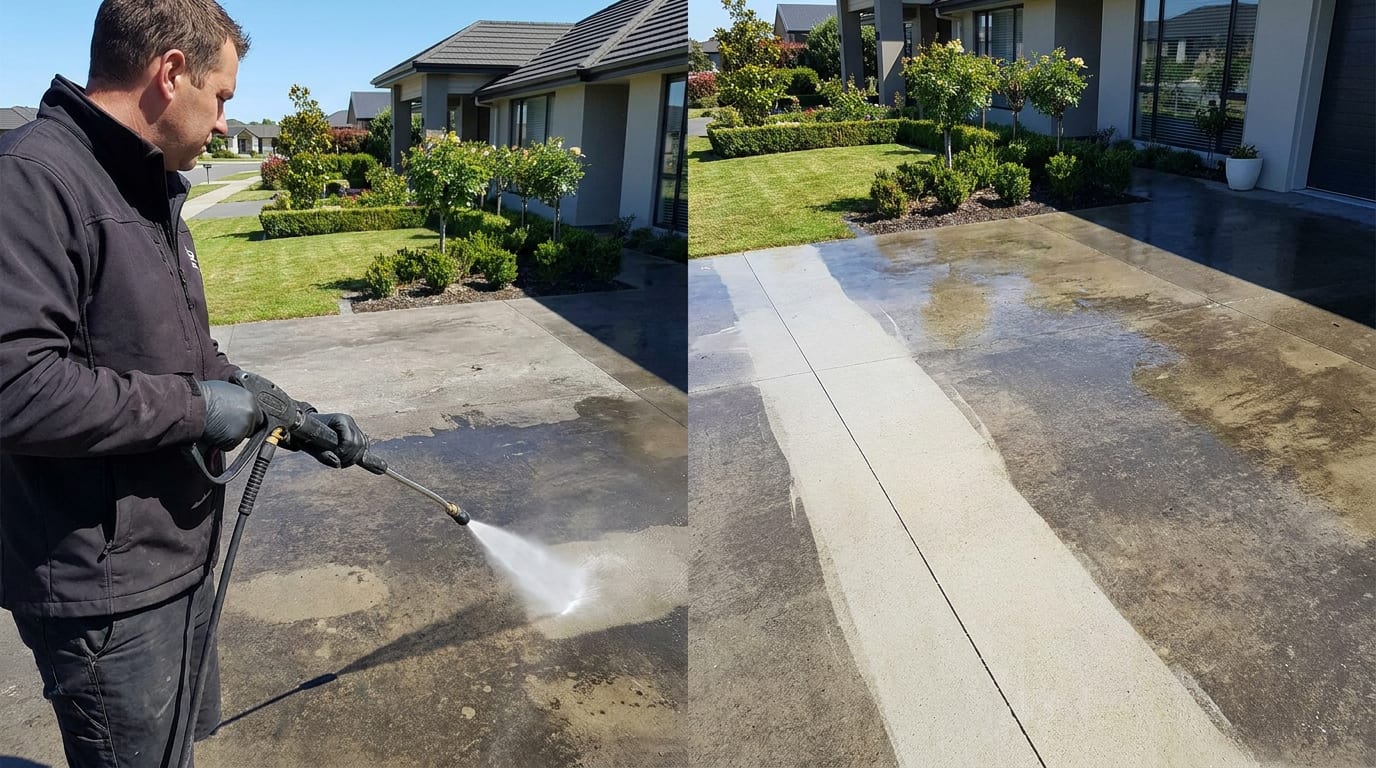
- Concrete, brick paving and hard surfaces: pressure is appropriate
The black streaks on a Nashville roof
Those dark streaks running down a roof are a cyanobacteria that feeds on the limestone filler in asphalt shingles. Middle Tennessee humidity suits it, and it appears first on the north-facing slope where the surface stays damp longest.
It is cosmetic at first and gradually becomes a heat and wear issue as it holds moisture against the shingles. A soft wash with an appropriate solution kills it and the residue weathers off over the following weeks, which is why the roof continues to improve after the crew has left.
What to ask a company doing it
What solution they use and at what strength, how they protect landscaping, and whether they pre-wet and rinse the plants around the house. Sodium hypochlorite based solutions are standard and effective, and they will damage plants that are not wetted before and rinsed after.
Also whether they are insured for roof work specifically, since walking a roof carries a different risk profile to standing on a driveway. A company that proposes to pressure wash a shingle roof has answered the competence question already.