
· by Michael Blair, Nashville's Pressure Washing
An asphalt driveway goes gray, then rough, then starts opening hairline cracks along the edges and around the low spots. Sealcoat slows that down, and plenty of Nashville homeowners think about it in the fall, once the summer heat is gone and the drive has taken another year of sun. Fall works, with one catch. Sealcoat cures by drying, it needs warmth and a dry forecast to do that, and by late October in Middle Tennessee the days that qualify are getting scarce.
What sealcoat does and does not do
Asphalt pavement is crushed stone held together by a petroleum binder. Sun and air oxidize that binder at the surface, which is why a black driveway fades to gray and the small stones start to stand proud. Sealcoat is a thin coating, usually an asphalt emulsion or a refined tar product mixed with fine sand, that replaces the worn top layer and keeps water and UV off the binder underneath.
It is a surface treatment and nothing more. It will not level a sunken spot, close a crack wider than a pencil or hold together a section already breaking into pieces, and a contractor who promises otherwise is selling black paint. Where the base under the asphalt has failed, the fix is patching or replacement; sealing over it hides the damage for a season.
The temperature and rain window
Most sealcoat products are water based and cure as the water evaporates. Manufacturers print their minimums on the label, and they typically want both the air and the pavement at around fifty degrees or warmer and rising, with no rain expected for at least a day. Cold slows the cure to a crawl. A heavy dew or a shower before it sets can wash the coating off or leave it streaked and tacky.
In a normal Nashville fall, September and most of October give plenty of workable days. Into November the mornings start near freezing, pavement under trees stays cold into midday, and the fall rain pattern brings wet spells that sit for several days. A job squeezed into that stretch can look fine on the day and peel by spring. If the warm, dry window has closed, fill the cracks now and seal in April or May.
- Air and pavement at the label minimum, usually around 50°F and rising
- No rain in the forecast for at least 24 hours after application
- Nights not dropping to freezing while it cures
- Enough sun on the surface to dry it, not just a mild gray afternoon
What has to happen before the sealer goes down
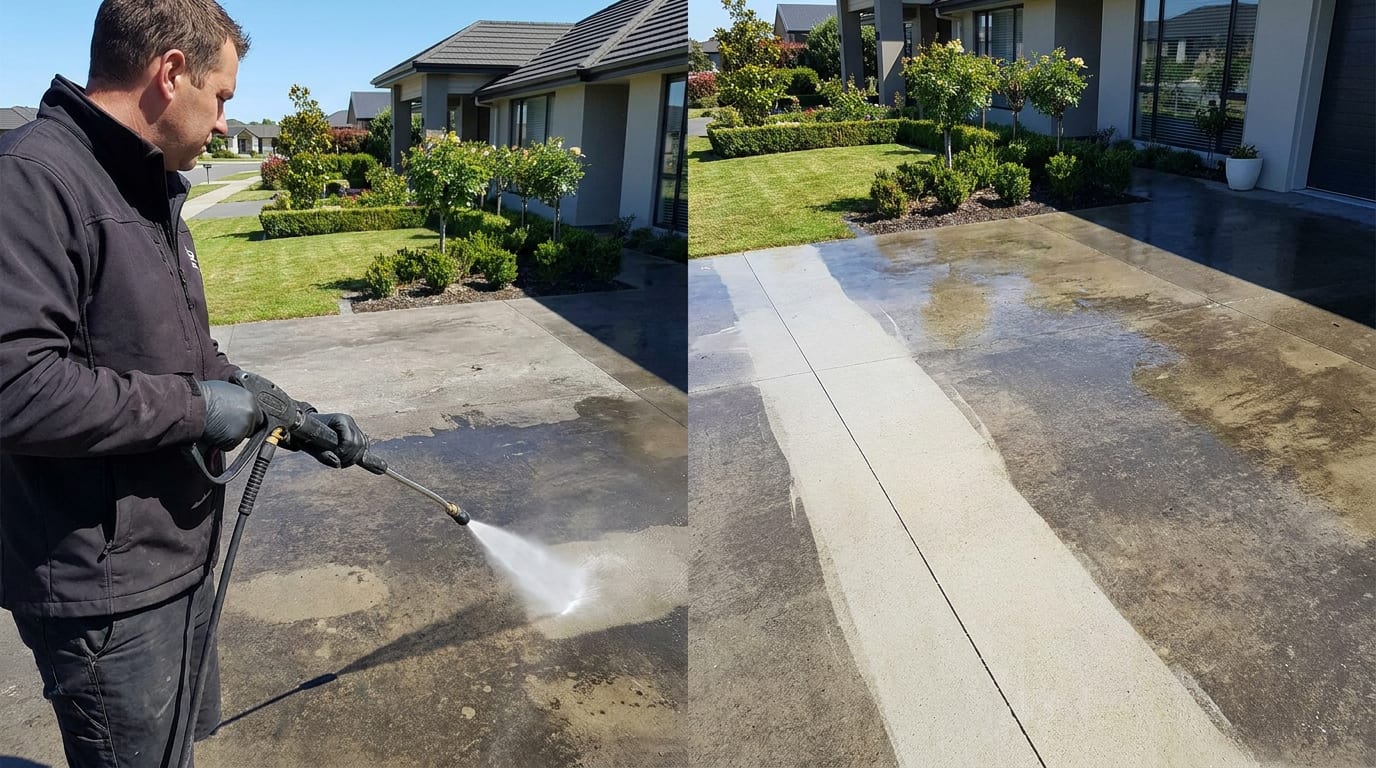
Sealcoat sticks to clean, dry asphalt and to nothing else. The drive is blown off and washed, and oil and transmission spots are scrubbed with a degreaser and treated with an oil-spot primer, because sealer laid over oil stays soft and lifts. Grass creeping over the edges and weeds in the cracks are cut back and pulled. Then the surface has to dry completely, which after a fall washing can mean tomorrow rather than this afternoon.
Cracks matter most going into winter. Water that gets into a crack freezes on a cold night, expands and pries the crack a little wider, and a Middle Tennessee winter brings a long run of nights that freeze and days that thaw. Cracks are cleaned out and filled with a rubberized filler, usually applied hot, before any sealing. A sealed driveway with open cracks under the coat is still drinking water.
How often, and what to watch for afterward
A residential driveway does not need sealing every year. Every few years is typical, depending on how much sun it takes and how much traffic it carries, and sealing too often builds a thick skin that cracks and flakes by itself. Fresh asphalt should not be sealed straight away either; the oils in new binder need time to settle, and most paving contractors want a new drive to go through a full season first.
After sealing, keep cars off it for as long as the contractor says, usually a day or more and longer when it is cool. Turning the steering wheel while parked on fresh sealer scuffs it. Concrete driveways, far more common in the newer subdivisions around here, take different sealers, penetrating or film-forming, but the same rule on temperature and a dry forecast holds.